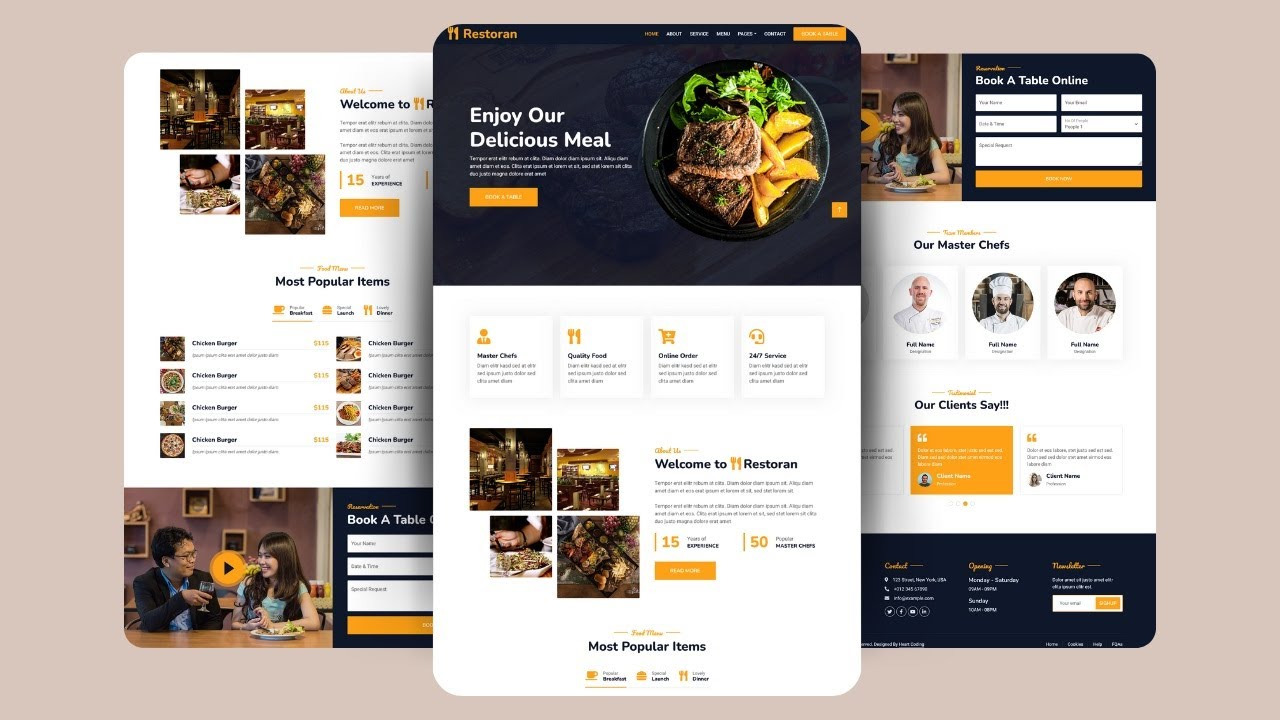
Why Your Restaurant Needs a Dedicated Website Building Tool
It is tempting in 2026 to think that a social media page is enough. You post your specials on Instagram, you update your hours on Facebook, and maybe you have a simple listing on Google. But relying solely on these platforms is like building your house on land you do not own. Algorithms change, platforms fade in popularity, and your content can get buried under an avalanche of other posts. A website is the one piece of the internet that truly belongs to you. It is your home base, the central hub where you control the narrative and the customer experience completely.
When you choose a platform built specifically for restaurants, you are not just getting a place to put some text and photos. You are getting a tool that understands the rhythm of your business. These builders come packed with features that generic templates simply do not offer. Think about the ability to update your menu in real time, changing a price or removing a dish instantly without having to email a developer. Consider the value of a reservation system that syncs with your floor plan and sends automatic reminders to guests to reduce no-shows. These are not nice-to-have extras, they are essential components of a modern restaurant operation . A specialized builder integrates these pieces seamlessly so your website becomes a revenue driver, not just a digital brochure. For more information.
Before you jump into the sea of options, it helps to know exactly what you are searching for. Not all platforms are created equal, and the right choice depends heavily on your specific type of operation. A fast-casual sandwich shop has different needs than a white-tablecloth fine dining establishment. A pizzeria focused on delivery needs different tools than a wine bar that thrives on reservations and event bookings. Understanding the core features that matter most will guide you toward the platform that fits like a glove.
You should be looking for a few critical elements. First, menu management is everything. Your menu is the star of the show, and the builder must let you present it beautifully, whether that is a simple list or an interactive grid with photos, descriptions, and dietary indicators. Second, consider how guests will book or order. Do you need a table reservation widget integrated with your calendar? Do you want online ordering that lets customers order for pickup or delivery directly through your site without paying per-order fees to a third party? Third, mobile responsiveness is non-negotiable. The majority of your guests will find you on their phones, and your site must look and work perfectly on a small screen . Finally, think about SEO and local search. You want to appear when someone searches for "best pasta near me," and a good builder will have tools baked in to help you rank higher in those local results.